Digitalization is bringing about profound changes across all industries and has long forced companies to think beyond simply having a website. This also applies to media companies, which are likewise facing structural changes accelerated by digitalization. Not only are readers seeking out journalistic multimedia content in real time and in digital form—across a wide variety of platforms.
With many new entrants and disruptive business models, competition is also becoming increasingly complex. And even though some people are tired of hearing the word “digitalization,” many are still in the early stages of implementing it in their processes. Others rely on the excuse: “That’s just how it’s always been done.” Yet even the latter are recognizing the need for change. After all, it opens up great opportunities for innovation, increased efficiency, and stronger customer loyalty. But to achieve this, companies must continuously adapt. So, to benefit from these opportunities, transformation processes are needed. And these involve technology just as much as they do people. So how is digital transformation unfolding in publishing houses and media companies?
Contents of this page
What is the digital transformation of media?
Die digitale Transformation ist im Grunde genommen der Übergang von traditionellen Prozessen und Geschäftsmodellen zu digitalen, um im digitalen Zeitalter erfolgreich zu sein, einen Mehrwert für die Kunden zu schaffen und dabei effizienter zu arbeiten. This definition of digital transformation applies to the media sector just as much as to other industries. The underlying element of such a transformation process is digitalization itself – from analogue to digital. When it comes to the media, the way content is consumed by audiences and created by competitors today has changed fundamentally. And with this change in media, media companies must develop accordingly.
This means that traditional media companies—such as publishers, television stations, and radio stations—must adapt and embrace digitalization—that is, undergo a digital transformation and adopt new technologies to modernize. But it’s not just about using new technologies or digitizing content and new offerings. Equally crucial is adapting corporate culture, structures, and working methods to ensure efficient processes. This may also mean that certain business processes will eventually be phased out because they are no longer needed and more efficient methods and solutions exist. And entirely new business models are emerging as well.
Opportunities and challenges of digitalization
Why is digital transformation important for media?
Will digitalization turn traditional media and publishers into losing players? Unfortunately, yes, if they do not manage to rethink their offerings and the way in which content is created, distributed and monetized. But no, if they take advantage of the opportunities offered by digitalization in the same way as others have already done. The digital transformation for media companies is therefore a necessity and also offers many advantages:
Vorteile digitaler Transformation
- Streamline processes and free up more time for creative tasks and innovation.
- Bring new formats and products to market quickly — or withdraw them just as quickly if necessary.
- Multichannel publishing is becoming the norm, and content is being distributed consistently and effectively across a wide range of digital channels.
- Better meet readers’ needs and find new ways to engage with the audience.
- Explore new avenues for monetizing content and unlocking growth opportunities.
In other words, those who can work faster and more efficiently while maintaining or even improving quality will have more opportunities in the future. And how can companies achieve this and build on the opportunities offered by digitalization? This requires innovative approaches and technologies, but above all transformation processes.
What does a digital transformation strategy look like?
Many companies are facing a comprehensive transformation. This involves redesigning business models and processes as well as content. However, a major challenge for many companies is the fear of change, and given the sheer complexity of the task, many ask themselves: Where should we even begin? The simple answer is: With a strategy.
What should such a strategy include?
Having a strategy doesn’t mean defining every small milestone and creating a project plan. Above all, we recommend focusing on the goals at the outset and keeping two things in mind:
Every company needs a clear vision. Which direction should it take? What should the future look like? How are we positioning ourselves? Why is change necessary? This vision serves as a guide for decisions and initiatives.
This vision is nothing without clear leadership that brings the entire team on board. Yet leadership does not necessarily have to be hierarchical. Depending on the size of the company, it can be a working group or one person with the necessary understanding and motivation to mobilize. They must be able to clearly communicate the need for change and serve as a role model for the adoption of new technologies and ways of working.
Practical Bonus Tip: Focus on People
Successful media companies incorporate people — especially customers — into their strategy. This means that while the benefits for employees are clearly a priority, they also prioritize a customer-centric approach that places user experiences and content at the center. The added value for colleagues and the audience alike is a key factor in why this matters. After all, efficiency means nothing if the content isn’t right.
Digital transformation – more tips on putting it into practice
Are the vision and goals clearly communicated? Then it’s time to do the work. Many processes are now being initiated and questions arise such as: “Which processes can be optimized?” or “How will we monetize our products in the future?” And there is often not just one right way to find the answers. Especially when it comes to new business models, change processes can also take some time. Methods such as the Business Model Canvas are applied, things are tested, learned and finally adapted. And yet there are also processes that companies can tackle directly and even implement to some extent – with visible results (including the motivation to continue):
Mindset: Establishing an innovative drive
A cultural shift towards openness, a willingness to learn and an innovative spirit is essential for a digital transformation. On the one hand, training and further education help to strengthen the digital skills of the workforce. But digitalization is also leading to hierarchies becoming flatter and more horizontal in many industries, with changes in communication structures. The result: teams can act more freely, quickly and without bureaucracy and ideas become innovations, new formats and even new business models. In other words, employees need room for creativity, but also the support to try something new – including new technologies.
Flexibility: Tackling the teams’ ability to transform
A cultural shift towards openness, a willingness to learn and an innovative spirit is essential for a digital transformation. On the one hand, training and further education help to strengthen the digital skills of the workforce. But digitalization is also leading to hierarchies becoming flatter and more horizontal in many industries, with changes in communication structures. The result: teams can act more freely, quickly and without bureaucracy and ideas become innovations, new formats and even new business models. In other words, employees need room for creativity, but also the support to try something new – including new technologies.
Performance: Supporting editorial processes with software
There is still a lot of potential for optimization in every content process. Numerous manual workflows, repetitive tasks and routines can be implemented much more efficiently today. Consequently, it is good to question whether some steps can be simplified with the help of innovative technologies. Here, there are several aspects that can be addressed at an early stage:
Collaboration: Involving external partners
Investing in the right technology and software helps to optimize processes and leverage automation potential. But the market already offers numerous solutions and tools: It is not always easy for companies to recognize which software is the right one. Doing your own research and testing is a good start. Nevertheless, the complexity of the digital landscape makes it difficult to navigate alone. It makes a lot of sense to build up a network and to bring in external partners, be they technology consultants or software start-ups, who can assess and evaluate the market, the target groups and, above all, the innovative solutions.
Real-life example
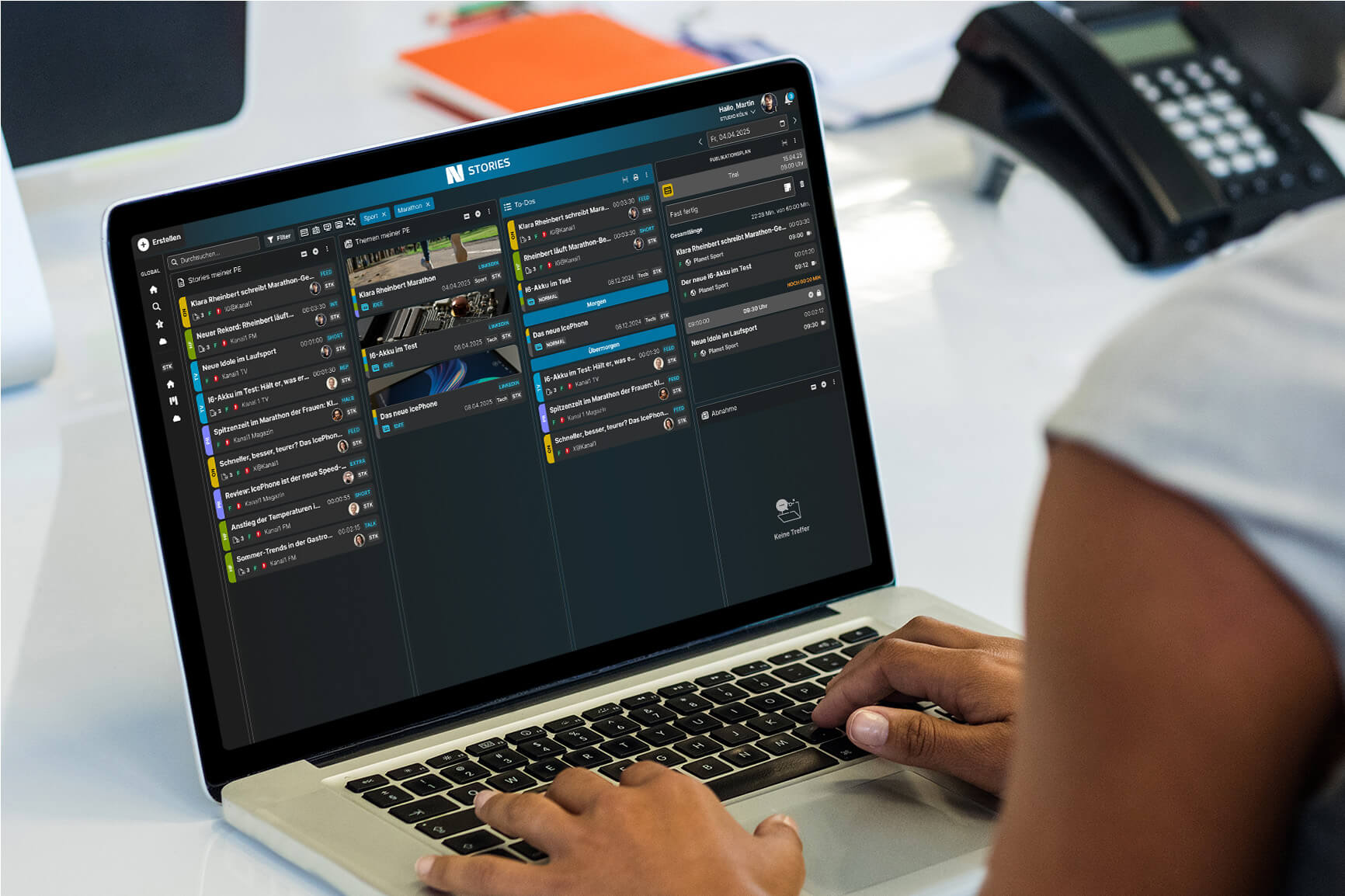
What do optimized editorial processes look like in practice? WDR has used the editorial software Newsmind Stories to establish cross-media topic planning and distribution:
Conclusion
Digital transformation is not an optional step for media companies. It is a necessary adaptation to changing market conditions and user expectations in order to be successful now and in the future. What is needed is a holistic transformation that includes strong leadership, a clear vision, customer centricity, flexible and scalable approaches and, in the best case, effective partnerships. In order to maximize potential, this includes cultural changes as well as technological ones.

More interesting articles that you shouldn’t miss