Cross-channel content publishing rarely fails because teams lack the desire to be on multiple platforms. The biggest hurdle is daily operations when teams try to translate strategic story management into channel-appropriate content execution.
This typically plays out in a few predictable ways:
- Conflicting messages: Sales promotes a feature on LinkedIn that’s already marked as outdated on the website. Errors like this confuse target audiences and damage brand consistency.
- Content chaos caused by format breakdowns: Time pressure leads to half-baked adaptations. Instead of translating a poll into a clear key takeaway for LinkedIn, a compressed press release gets dumped into the feed. The content fits neither the platform nor the audience.
- High team frustration: Content teams spend hours on manual duplicate work, hunting for assets, dealing with long sign-off chains, and coordinating via email.
Why is cross-channel publishing still critical? Content distribution doesn’t just push out content – it ensures organizational goals are actually met. Depending on your core strategy, your priorities might focus on external reach, lead generation, brand marketing, employer branding, or targeted internal communications.
An effective distribution strategy relies on three pillars:
Across all three pillars, the main goal of cross-media publishing remains unchanged: delivering a consistent core message to stakeholders without losing vital context along the way.
What gets in the way of smooth content publishing?
High-level business strategies usually come defined as annual goals and key themes, setting the direction for content marketing. The gap happens during execution—translating those themes into an operational content strategy. Rigid silos and unclear roles cause high-level goals to get lost in the flood of daily tasks.
1. Strategic fragmentation
When there’s no bridge to daily story planning, well-intentioned teams end up working past each other:
- Channel silos over core stories: PR, social media, and marketing follow their own sub-strategies. Every department manages its channels in isolation instead of amplifying shared priorities across platforms.
- Thinking in formats instead of stories: Teams plan the end product right away – like a video or a blog post. Without a channel-agnostic core story, valuable research gets wasted after a single post instead of serving as building blocks for other channels.
- Invisible backlogs: Because teams lack visibility into other departments’ upcoming pipelines, editorial teams duplicate effort or publish conflicting core statements.
- Reactive fire-fighting: Without a unified story structure and editorial calendar, real-time requests always win out – causing strategic messages to fall through the cracks.
2. Process and technical friction
Lacking a shared workspace forces teams to rely on decentralized quick-fixes for content planning:
- No single source of truth: Facts, approvals, and usage rights live scattered across email threads, chat logs, and spreadsheets. When information gets out of sync, final messaging diverges depending on the channel.
- Sluggish approvals: Without transparent status boards, deadlines get missed in messy email chains. Nobody can see at a glance where a piece of content is currently blocked.
- No room for COPE (Create Once, Publish Everywhere): Because rights management and asset storage aren’t attached to the central story, every channel team has to search for, request, and manually re-format media assets from scratch.
3. Lack of performance tracking and metrics
Data is usually analyzed in isolation per channel, with no real performance evaluation happening at the story level:
- Flying blind on overall performance: Metrics stay trapped in platform silos. Teams see website clicks or LinkedIn likes, but can’t evaluate how the overarching story performed as a whole.
- No effort-to-impact visibility: Newsrooms can’t see whether the time spent adapting content for a specific channel matched the actual impact generated. Future content decisions remain based on gut feeling.
The strategy against the chaos: A centralized Content Hub
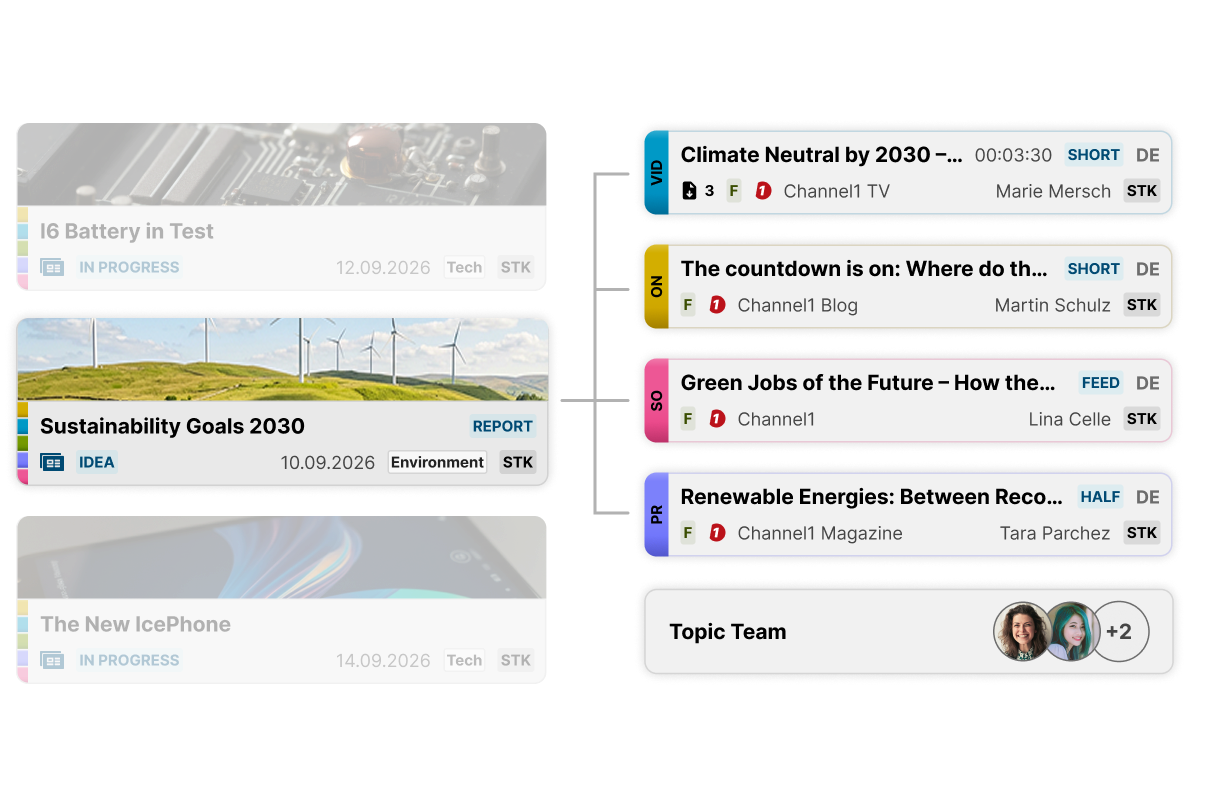
Working story-centric means communication isn’t planned around isolated tactics or individual channels, but around overarching stories. These stories create the shared foundation for content, messaging, and activities—both internally and externally.
An integrated Content Hub replaces disconnected point solutions. An editorial and content planning platform like Newsmind Stories connects strategy, production, and analytics in one single system. It tackles the root causes of planning chaos head-on:
- Story-centric planning: The story takes center stage, not the channel. All teams work off a shared foundation for short-, medium-, and long-term communication planning, deriving channel-specific content directly from it.
- Centralized asset management: Copy, images, and video assets are linked directly to the story. This eliminates endless searches, duplicate effort, and version-control issues.
- Clear status visibility: Dashboards and Kanban boards show exactly where a story stands at any moment—from initial idea to approval and publishing.
- Explicit access and role management: Defined roles clearly establish who creates, reviews, and provides final sign-off on content.
The end-to-end content workflow in practice
Here is how a story-centric operating model changes daily newsroom work step by step:
1. Embed your strategy
Annual and quarterly goals serve as overarching pillars. They define the strategic themes that guide all upcoming stories.
2. Structure your stories
Topic owners or story teams break down core strategic priorities into actionable stories, enriching them centrally with key facts, deadlines, and visuals. This editorial planning forms the foundation for cross-channel execution.
3. Tailor content for each channel
Specific content blocks are created directly from the central story: a blog post, social media updates, or a section for the newsletter. Built-in AI assistance within Newsmind Stories helps draft initial copy, rephrase text for different audiences, or generate content variations.
4. Streamline approvals
Transparent workflows replace drawn-out email loops. Custom view filters and clear task assignments shorten approval cycles, allowing stakeholders to approve content right inside the system.
5. Publish faster
Social media channels are managed directly from the platform, while integrations connect seamlessly with your CMS. If direct publishing isn’t needed, all content can be exported in a structured format.
6. Optimize with data
Performance data flows back from your channels directly into the story. Teams instantly see which content performed best on which channel – using those insights to drive the next planning cycle.

More interesting articles that you shouldn’t miss