
In large enterprises and multinational corporations, coordination between Marketing, PR, HR, and Investor Relations is often hindered by fragmented planning. When departments and locations operate without a central overview, the result is duplicated effort, parallel content production, and inconsistent messaging to stakeholders.
True integrated communications puts an end to this silo mentality. Instead of managing channels like social media, the intranet, or external publications in isolation, strategic stories take center stage within the organization. How can companies achieve this? By adopting a newsroom model on a unified technical foundation. The result: every team works with the same insights, resources are deployed effectively, and communications measurably contribute to corporate goals.
Contents of this page
The challenges of fragmented communication
When planning layers for web, social media, video, and internal channels exist only in isolation, it leads to significant operational friction. This lack of synchronization makes it nearly impossible to prioritize stories strategically and allocate budgets where they generate the greatest impact:
Inefficiency caused by a lack of transparency
Without a central overview, different departments often unknowingly work on similar content, leading to redundant research and multiple productions for the same core message. Instead of leveraging synergies, time and resources are wasted on identical processes, while simultaneously weakening the consistency of the brand message.
Manual coordination overload
The use of isolated lists and disparate apps for different channels encourages the growth of data silos. Information remains trapped in scattered systems, making cross-departmental collaboration difficult. Coordination usually relies on tedious email threads or analog meetings where topics are simply “read out loud.” This manual overhead is time-consuming and causes relevant stories to get lost in the noise instead of being purposefully orchestrated across all channels.
The measurable value of integrated communications
Integrated communications is not just a theoretical concept; it is a strategic business lever for modern organizations. By consistently linking strategy with execution, companies achieve tangible results:
The newsroom model: breaking down silos
The newsroom model dissolves rigid departmental boundaries, bringing specialized expertise together in interdisciplinary collaboration. Instead of thinking in channels, the focus shifts to the editorial content itself. This shift is crucial:
Story-centricity: “story-first” instead of “channel-first”
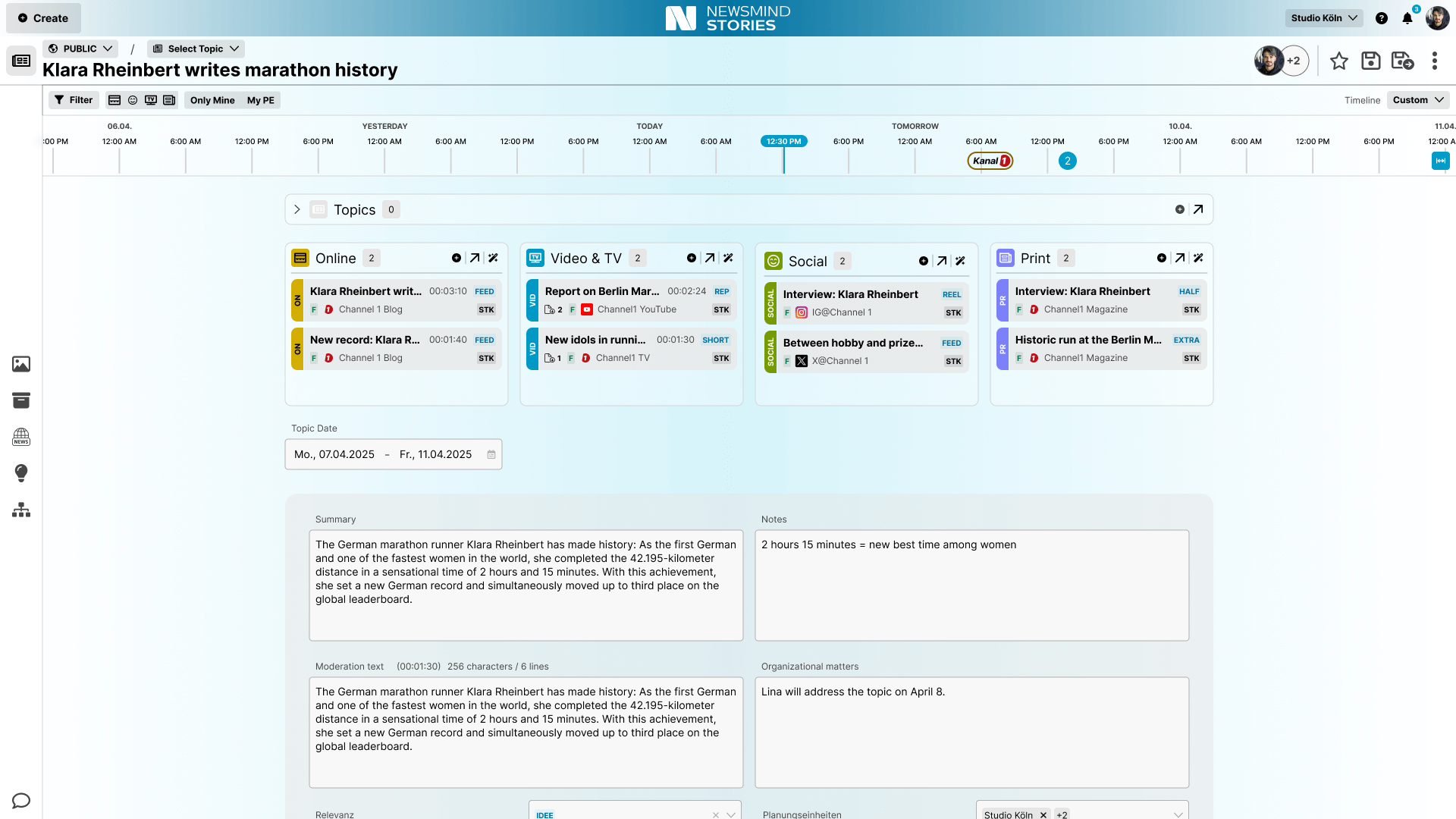
Efficient workflows are built on developing a story holistically before media-specific adaptation begins. This “single source” approach prevents teams from working on identical content in parallel. A central asset pool serves as the master interface, bundling all ideas and materials for further planning.
Roles and governance: defining clear responsibilities
In a modern corporate newsroom, tasks are assigned by function to minimize coordination loops. Roles such as Story Managers control the depth of the content, while Channel Leads ensure optimal distribution for LinkedIn, the intranet, or external platforms. This structure creates transparency regarding responsibilities and deadlines, allowing the approval process to remain fully digital and free of delays.
Corporate publishing today: how organizations manage content strategically
Why integrated communications often fails in practice
The newsroom model is well-known in theory, but its implementation into everyday corporate life often stalls for three main reasons:
- Tool proliferation: Teams work in isolated systems. When planning, coordination, and execution happen in separate tools, the strategic focus is lost.
- Lack of centralization: A newsroom without a “Single Source of Truth” remains a purely physical relocation without achieving any real process improvement.
- Scalability issues: Manual processes block a global multichannel strategy—especially within complex organizational structures.
Integrated communications: Which software to use as a foundation?
Technology is the decisive lever for enabling integrated content work in large organizations. To scale effectively, software is required that supports teams along the entire content value chain. The Newsmind Stories editorial system provides a flexible platform for this purpose, bringing structure to complex planning processes and enabling seamless workflows from initial idea to final publication.
What matters most is not the number of features, but how well they work together:
Strategic topic and editorial management
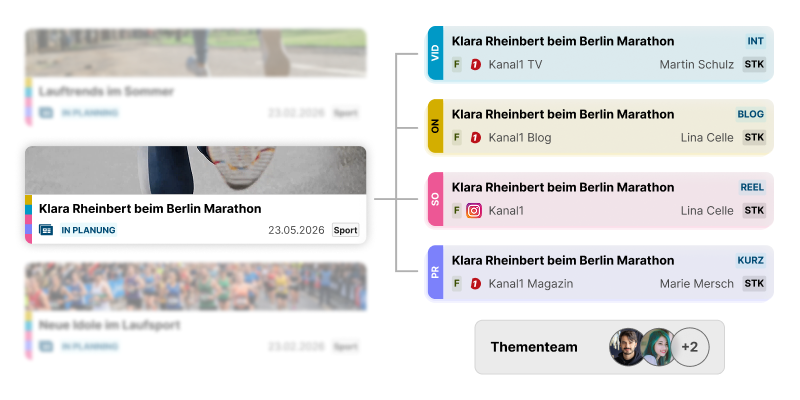
Instead of working in isolated lists, Newsmind Stories centralizes strategic topic management: all topics converge in one place. Teams can see immediately what is being worked on, how content is interconnected, and which priorities apply.
This tangibly transforms the way of working: instead of isolated planning, a shared understanding of content is created, providing a clear foundation for decision-making.
Role management and global collaboration
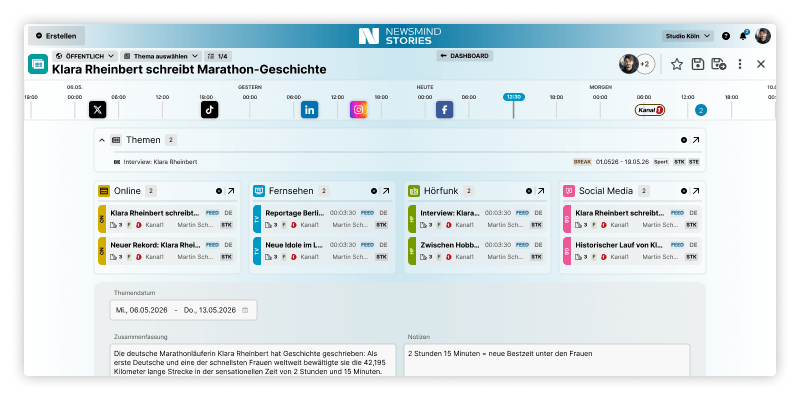
Efficient integrated communication requires clear responsibilities. Newsmind Stories digitally maps specific roles and individual dashboards to reduce feedback loops.
The result: Every individual works based on clearly defined responsibilities. At the same time, collaboration remains flexible and transparent. Fewer inquiries, less coordination, and more focus on content. Teams can also collaborate efficiently across different locations without losing the big picture.
AI in the workflow: support that truly reduces the workload
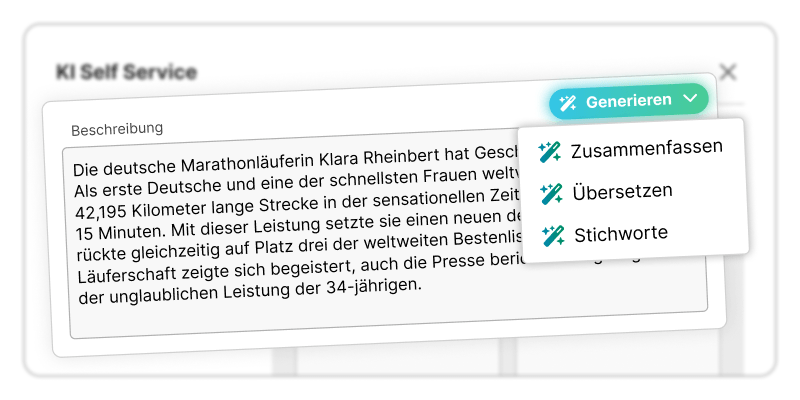
In Newsmind Stories, Artificial Intelligence is not an isolated add-on, but an integral part of the editorial workflow. The AI steps in where time is typically lost in daily routines: scanning topics, structuring content, or adapting it for various channels. Because it is directly integrated into the system, it becomes a natural part of the work process (rather than an additional tool that requires separate maintenance). Furthermore, with the AI Self-Service in Newsmind Stories, admins can tailor AI functions and prompts precisely to their company’s corporate identity.
Performance steering: linking strategy and analytics
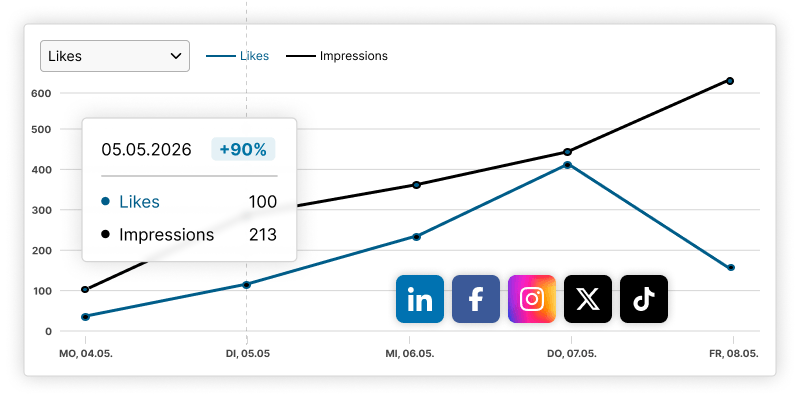
In Newsmind Stories, planning and evaluation are seamlessly intertwined. With Social Media Insights, teams can see in real time which content is performing well and align their topics accordingly. This creates a continuous cycle: plan, publish, evaluate—and make better decisions based on real-world data.
How does that work in practice?
In a free, no-obligation demo, we’ll be happy to show you how Newsmind Stories is designed for integrated communications. Bring your questions to a joint online call, where we can dive directly into the tool to explore its content management features and AI-powered support.

Conclusion: better communication through structure and technology
In large organizations, integrated communications is not a given; it is the result of a deliberate strategy, clear roles, and modern technology. By consistently breaking down silos and placing stories at the heart of their operations, companies avoid costly duplication of effort and ensure their messaging remains consistent across all channels.
Our tip: Build a shared understanding of how to translate your strategic goals into operational newsroom workflows:
- Story-centric collaboration: Content is no longer created in isolation based on individual requests. Instead, stories are evaluated collectively, categorized strategically, and consistently aligned with overarching communication goals.
- Clearer roles: Distinct responsibilities separate the content-driven management by story managers from the platform-specific preparation handled by channel leads or content directors.
- Standardized processes: Digital workflows replace ad-hoc coordination, ensuring consistent execution across all departments.
- The editorial tool as a foundation: An editorial management software like Newsmind Stories maps these structures digitally, creating transparency and enabling efficient content collaboration.
The result is efficient content creation that conserves resources while ensuring that strategic corporate objectives remain the focus of every single publication.
FAQs
More interesting articles that you shouldn’t miss