Many communications teams produce truly great content. Yet, they often lack a clear overview: topics run in parallel, channels operate in silos, and consistency gets lost. This is exactly where story-centric working comes in. It provides structure without stifling creativity – connecting planning, execution, and steering around shared themes. Instead of thinking about content in isolation, the story takes center stage. It serves as a guide for teams, channels, and formats, making integrated communications truly practical for the first time.
What does story-centric working mean in corporate communications?
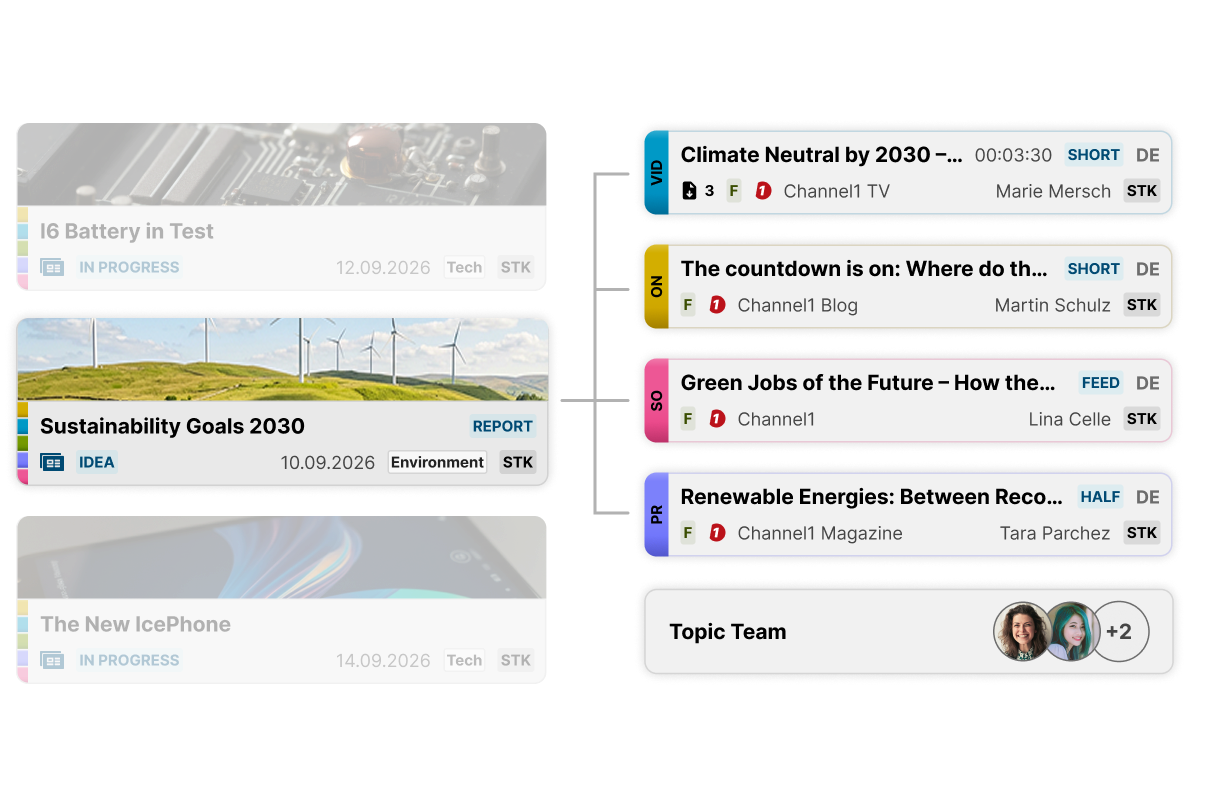
Story-centric working means that communication is not planned around individual activities or channels, but around overarching themes. These themes form the shared framework for content, stories, and activities—both internally and externally.
This is particularly relevant for organizations with complex structures. Without it, when Corporate Branding, Corporate Newsroom, department communications, and Internal Communications operate in parallel, it quickly leads to duplicate content, conflicting messages, or unnecessary alignment loops. With a story-centric approach, a theme is defined centrally and developed collaboratively. Teams still set their own priorities, but they work from the exact same core content.
A topic doesn’t have to be a campaign with a start and end date. It is an ongoing work unit – enriched with context, target audiences, core messages, and key dates. Content is created along this central theme, then expanded, adapted, or revisited over time. This ensures communication remains consistent, even when many stakeholders and channels are involved.
Why use a story-centric approach in corporate communications?
The key benefits at a glance:
The more channels, formats, and stakeholders involved, the more critical a shared point of reference becomes. Story-centric workflows provide exactly that: they offer guidance and help teams plan content strategically without slowing down day-to-day operations.
- Greater efficiency: Content is no longer reinvented from scratch; instead, it is developed from a single, shared topic core.
- Consistent communication: Messaging remains cohesive across all channels, even when managed by different teams.
- Better collaboration: Everyone involved accesses the exact same topic pool, significantly reducing review cycles and misunderstandings.
- Faster publishing: Content can be prepped, prioritized, and coordinated with much better timing.
- More strategic workflows: Topics directly support overarching corporate goals, rather than just serving isolated activities.
- Simpler content recycling: Existing content can be easily repurposed, updated, or combined in new ways.
In short: A story-centric approach brings structure to your planning without making it rigid. Teams maintain a clear overview, stay more focused, and can develop content with long-term value.
How story-centric workflows look in practice
Story-centric working is not a new organizational model, but a different way of planning and collaborating (ideally mapped out within your editorial system). This approach can be introduced step by step and integrates smoothly into existing workflows. The critical factor is that stories become the unifying element—all the way from initial planning to final evaluation.
Story-centric workflows with Newsmind Stories
If you want to adopt a story-centric workflow, you need a space where topics are more than just loose notes or campaign headlines. More than just a traditional planning tool. You need an intelligent editorial system that serves as a central hub to bring all content, data, and processes together. That is exactly what Newsmind Stories was built for.
The product philosophy is guided by four clear principles:
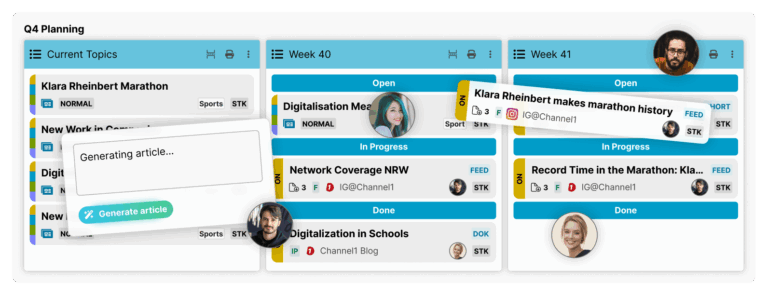
The real game-changer is making the connections visible. It brings total transparency to who is working on what, which assets belong to which story, and how planning, production, and performance data intersect. This is what makes a story-centric approach actually work in your daily routine.
What an ideal content workflow looks like in Newsmind Stories
Conclusion: A shared story base delivers clarity and impact
Story-centric workflows bring order to complex communication structures. Instead of planning content in silos, teams work from a shared story base with clear responsibilities, aligned messaging, and a better overall picture. This reduces duplicate work, simplifies collaboration, and makes communication more strategic without adding complexity. Content can be purposefully developed, repurposed, and deployed consistently across all channels.
For corporate newsrooms and large content teams, a story-centric workflow is not an additional process, but a logical evolution of what many are already doing – just more structured, interconnected, and sustainable.
More interesting articles that you shouldn’t miss